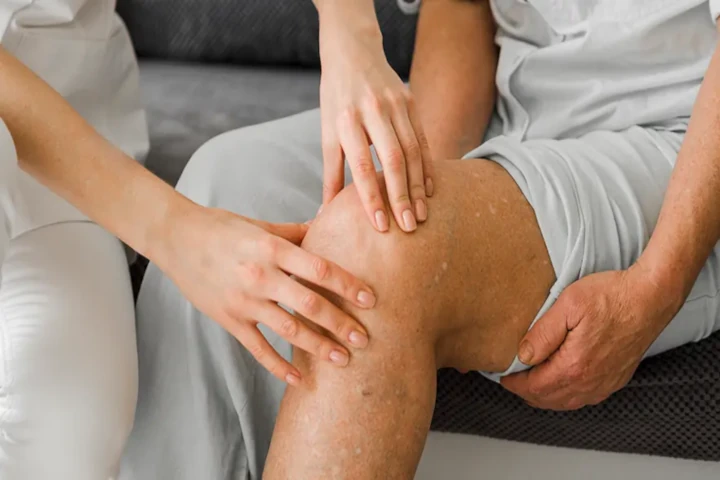
You sit down after a short walk, or perhaps just a routine trip to the local grocery store, and there it is: that deep, throbbing, unrelenting ache directly under your kneecap. You have diligently tried standard heating pads, generic internet stretching routines, and maybe even a basic home TENS machine that gave you twenty minutes of mild relief before the stiffness locked your joint right back up. Waking up every morning and dreading the stairs in your own home is an incredibly exhausting way to navigate your life.
Treats the Root Cause, Not Just the Symptoms
If you feel like your current treatments are only masking the problem rather than solving it, your frustration is completely justified. Many standard clinical approaches only scratch the surface, temporarily interrupting pain signals without actually changing the rigid mechanical environment inside your affected joint. It is disheartening to invest precious time in physical therapy only to feel that same sharp, catching sensation when you stand up from a chair. Searching for a deeper, more advanced cellular approach to healing your knee is the right step forward.
Table of Contents
Explain the Condition
To understand why your knee refuses to heal, we have to look at the difference between masking pain and repairing tissue. A standard TENS unit works on the basic gate control theory of pain. It floods your superficial sensory nerves with a mild electrical buzzing sensation, which temporarily distracts your brain from registering the pain signals originating deep inside your knee. However, the moment you peel those sticky pads off and turn the machine down, the electrical distraction stops entirely, leaving the underlying mechanical issue completely unchanged.

Inside your aching knee, chronic pain fundamentally alters the actual tissue structure. When protective cartilage wears down or supporting ligaments are strained, the massive muscles surrounding the joint, specifically your quadriceps and calves, immediately go into a rigid, protective spasm. This constant, unyielding muscular tension severely restricts local blood circulation. Stagnant lymphatic fluid begins to build up, causing the joint to swell visibly and feel incredibly tight. The muscle fibers themselves become adhered together with microscopic scar tissue, rapidly losing their natural elasticity. Because standard electrical stimulation does not physically release these deep muscle contractures or manually pump out the stagnant cellular waste, the joint remains mechanically stiff, starved of vital oxygen, and highly vulnerable to destructive friction every single time you take a step.
Why This Should Not Be Ignored
Hoping this deep structural stiffness will eventually resolve on its own forces your body to adapt in highly destructive ways. To naturally avoid that sharp twinge in your knee, your brain will subconsciously force you to shorten your walking stride or shift your entire body weight heavily onto your opposite, healthy leg. Over weeks and months, this unnatural, lopsided compensation pattern places severe, abnormal stress on your opposite hip socket and your lower lumbar spine.
What originally began as an isolated knee issue can rapidly snowball into a widespread cascade of lower-body joint dysfunction. Furthermore, as you naturally move less to avoid the daily discomfort, the vital synovial fluid that lubricates your internal knee joint stops circulating efficiently. The enclosed joint capsule dries out and tightens, dramatically accelerating the progression of underlying osteoarthritis and significantly increasing your daily risk of sustaining a sudden, painful meniscus tear.
How Physiotherapy Helps Repair the Joint
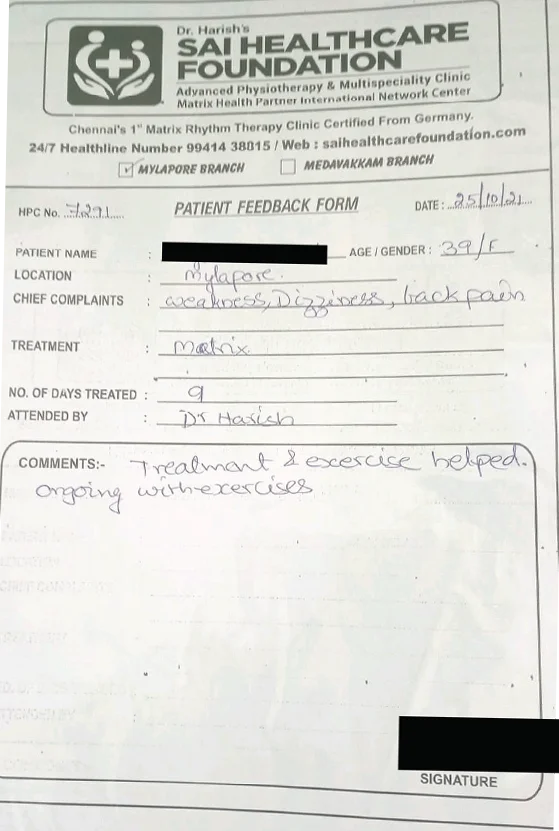
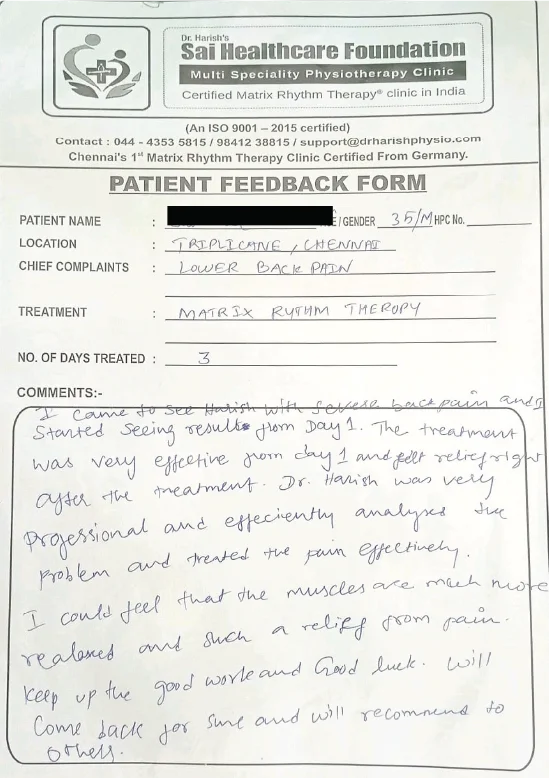
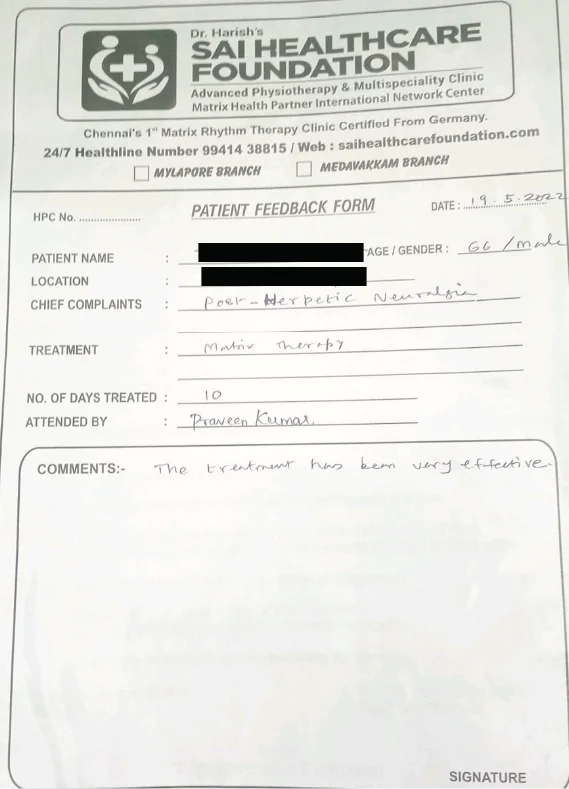
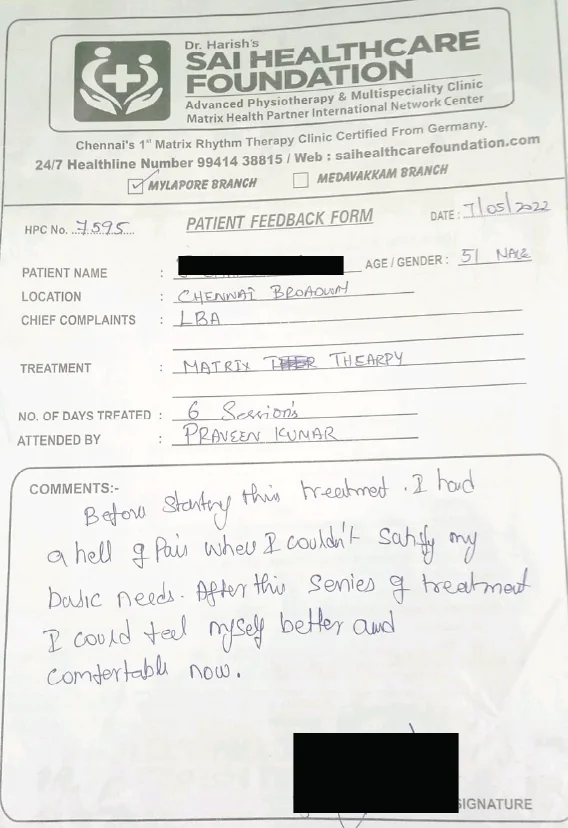
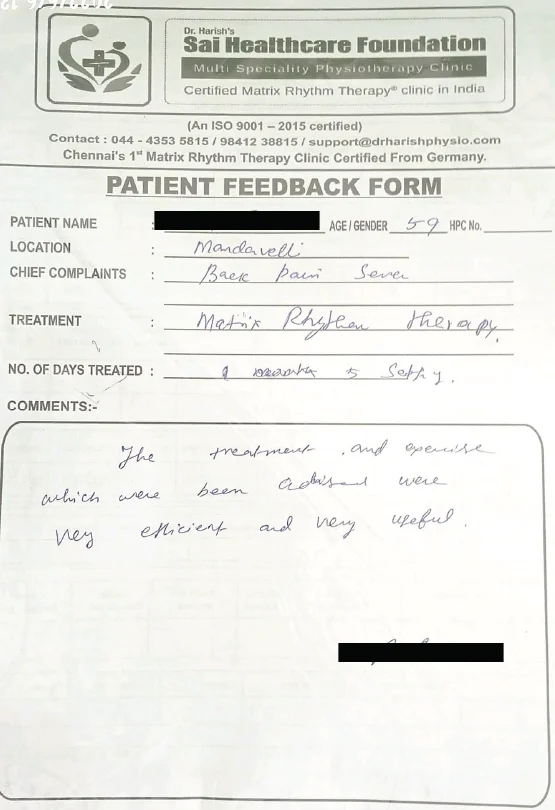
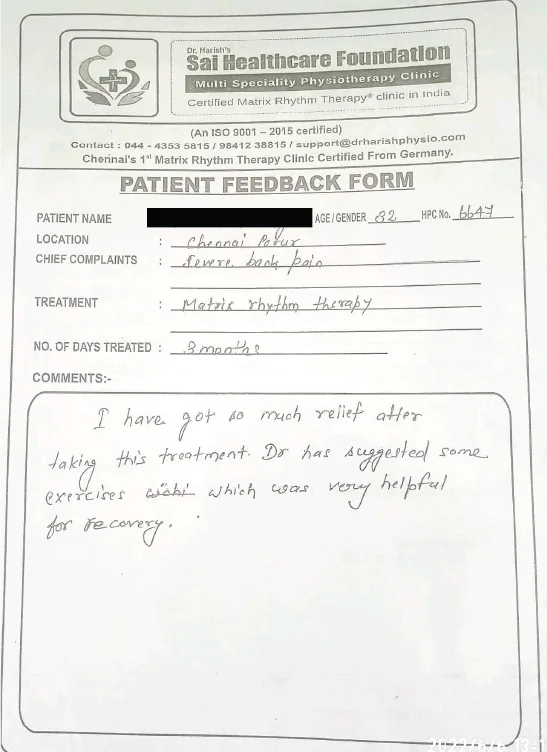
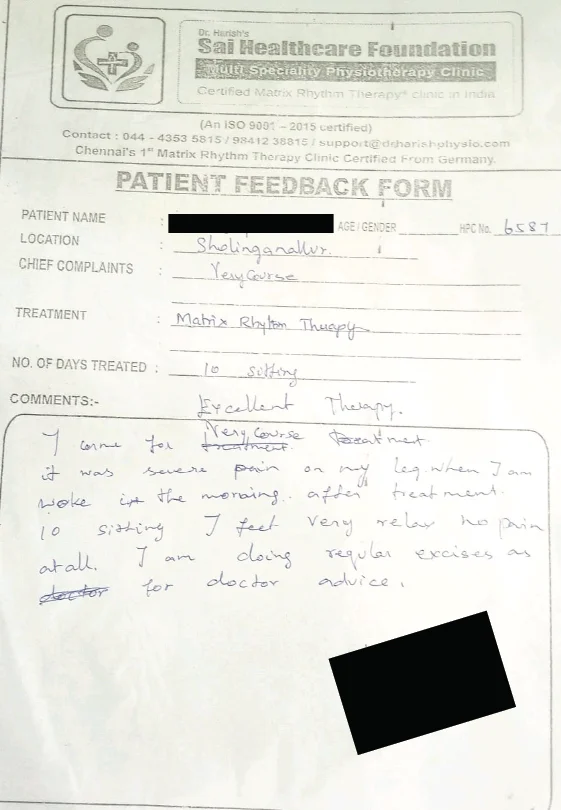
At Sai Healthcare Foundation, our clinical team recognizes that true, lasting healing must happen at the microscopic, cellular level. This is exactly why we specialize in Matrix Rhythm Therapy for patients who have frustratingly plateaued with conventional treatment methods. Dr. Harish Kumar R is among a highly select group of certified practitioners in India offering this advanced, non-surgical intervention.
Unlike a TENS machine, which only provides temporary neurological distraction, Matrix Rhythm Therapy actively changes the physical state of your damaged tissues. The specialized device delivers highly targeted mechanical micro-pulsations that closely mirror the natural resting frequency of healthy human muscle fibers. As this deeply penetrating rhythmic vibration travels into the dense tissues surrounding your knee, it physically releases hardened muscle fascia and actively breaks down stubborn micro-adhesions that are locking the joint in place.
More importantly, this therapy acts as a powerful, localized mechanical pump. It physically forces out trapped lymphatic fluid that causes chronic knee swelling while simultaneously drawing in fresh, oxygenated arterial blood. This sudden influx of oxygen helps restart the stalled cellular repair process. We seamlessly combine this cellular therapy with highly specific Manual Therapy to safely restore the natural glide of your kneecap, alongside targeted Exercise Rehabilitation to rebuild the shock-absorbing strength of your quadriceps. By directly addressing the actual cellular environment and reducing biomechanical friction, this highly specialized physiotherapy for knee pain provides a strong foundation for genuine, long-lasting joint recovery.
What Recovery Realistically Looks Like
Rebuilding a structurally healthy knee environment requires focused clinical patience and consistency. True healing is a process, not an overnight event. After your first two to three sessions of Matrix Rhythm Therapy, the most immediate and encouraging change is typically a profound feeling of lightness in the affected leg and a visible reduction in stubborn localized swelling. The joint simply feels less jammed when you walk.
By the third or fourth week of consistent treatment, as the deep muscle tension gradually releases and your supporting core strength improves, you may notice yourself tackling flights of stairs with far more confidence and significantly less hesitation. There may still be occasional days when the knee aches slightly after a new, challenging exercise progression, but this is a normal and expected part of safe tissue remodeling. Long-term recovery ultimately means returning to your daily evening walks and routine social activities without the constant fear of a sudden pain flare-up.
What You Can Do Right Now
While you prepare to seek a professional clinical diagnosis, there are immediate and practical steps you can take to protect your vulnerable knee joint at home and prevent further aggravation.
Avoid Deep Squatting and Low Furniture
Every time you attempt to stand up from a low, soft sofa, the compressive shear force placed directly behind your kneecap increases significantly. This pressure grinds the inflamed cartilage together. Always choose higher, firmer chairs with sturdy armrests. Use your upper body and arms to actively push yourself up, taking immediate stress off the vulnerable knee joint during the transition from sitting to standing.
Keep the Joint Moving Without Heavy Impact
A common misconception is that total bed rest is the best cure for an aching knee. In reality, total rest is the enemy of joint health. Your knee requires regular, smooth movement to circulate its natural lubricating synovial fluid. Try performing gentle seated leg extensions while watching television. Alternatively, riding a stationary bicycle with zero resistance is an excellent way to keep the joint nourished and mobile without subjecting it to the damaging impact of your full body weight.
Wear Supportive Footwear Inside the House
Many people carefully choose their outdoor walking shoes but spend hours walking barefoot on hard tile floors at home. Walking barefoot removes your body’s natural shock absorbers, forcing your compromised knee to absorb the impact of every step. Wear cushioned, supportive footwear even inside your house to help reduce these impact forces before they travel up your shin bone.
Wear Supportive Footwear Inside the House
If your knee feels unusually warm, puffy, and throbbing after a long day on your feet, apply a cold gel pack wrapped in a damp towel for fifteen minutes. This helps constrict blood vessels and reduce acute inflammation. Conversely, if the joint simply feels stiff and tight when you first wake up, use a warm, moist towel for ten minutes to help relax the surrounding quadriceps muscles before you begin moving.
Finding Lasting Relief with Matrix Rhythm Therapy for Knee Pain
You do not have to settle for basic treatments that offer only a few fleeting hours of relief. When standard electrical stimulation fails to resolve your mobility issues, addressing the deeper cellular environment of your knee may be the key to regaining your physical freedom. The right, highly specialized physiotherapy for knee pain can fundamentally change how you move and how you live your daily life.
At Sai Healthcare Foundation, our experienced physiotherapists use Matrix Rhythm Therapy as part of personalised treatment programmes designed to help patients move with greater comfort and confidence. Visit our clinics in Mylapore, Anna Nagar, Medavakkam, or Madhanandapuram, Chennai, to learn whether Matrix Rhythm Therapy for knee pain is the right option for your recovery journey.