
Diabetic Foot Health plays a vital role in overall diabetes management. Yet, it’s something many people tend to overlook until a small problem becomes serious. If you have diabetes, your feet need special care every day. High blood sugar levels can reduce circulation and damage nerves, especially in your feet. This means even minor cuts, blisters, or pressure sores can become infected and difficult to heal.
Simple habits like checking your feet daily, wearing comfortable shoes, and seeking help early can make a big difference. Whether you are newly diagnosed or have been living with diabetes for years, these expert tips will help you maintain foot health and prevent complications.
Table of Contents
Expert Tips to Manage Diabetic Foot Health and Wounds
Living with diabetes means taking extra care of every part of your body, and your feet are no exception. High blood sugar levels can reduce blood flow and damage nerves in your feet, making even small injuries dangerous. Foot problems can start with a small cut, blister, or pressure wound and quickly turn serious if not noticed in time.
With the right care and support, many of these risks can be avoided. Here are some expert tips to help you protect your feet and maintain good foot health.

Why Is Diabetic Foot Care Important?
People with diabetes are at a higher risk of developing foot problems because of poor blood circulation and reduced sensation. This condition, known as diabetic foot, makes it harder to feel pain or notice minor injuries. Left untreated, these small problems can develop into wounds, ulcers, or serious infections.
With regular checks, early care, and proper diabetic foot treatment, you can prevent complications and maintain healthy feet.
7 Expert Tips to Protect and Care for Diabetic Feet
1. Inspect your feet daily
Look for cuts, blisters, redness, swelling, or changes in skin colour. Use a mirror to check the soles and spaces between your toes, as diabetic foot problems often start in these hidden areas.
2. Keep your feet clean and dry
Wash your feet gently with lukewarm water and mild soap every day. Dry them thoroughly, especially between the toes. Moist environments between the toes can lead to fungal infections.
3. Moisturise your feet
Apply moisturiser to prevent dry, cracked skin, which can increase the risk of infection. Avoid applying cream between your toes as it may trap moisture and cause fungal problems.
4. Wear proper footwear
Always wear well-cushioned, properly fitted shoes to protect your feet. Avoid open footwear or walking barefoot, even indoors, as unnoticed injuries can occur easily.
5. Trim nails carefully
Cut your toenails straight across and file the edges gently to prevent ingrown toenails and accidental cuts. If you struggle to trim them safely, have them done by a professional.
6. Control blood sugar levels
Good blood sugar management improves circulation and helps prevent foot complications. Follow your doctor’s advice on medication, diet, and exercise to keep your sugar levels in check.
7. Avoid self-treating wounds
Never attempt to treat foot wounds at home using unknown remedies or ointments. Always consult a healthcare professional for proper wound care and diabetic foot treatment to avoid serious complications.
How Physiotherapy Helps in Diabetic Foot Management
Physiotherapy plays an important role in managing foot complications, especially for those with restricted movement, muscle weakness, or balance issues due to nerve damage.
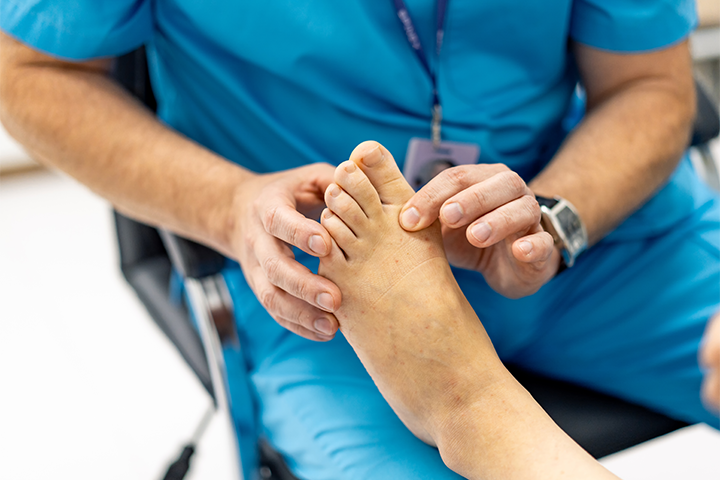
Diabetic Foot Physiotherapy includes guided exercises to improve blood circulation, muscle strength, joint flexibility, and balance. Special techniques are also used to reduce swelling, ease foot pain, and promote faster wound healing as part of a comprehensive diabetic foot treatment plan.
Complete Diabetic Foot Treatment Services at Sai Healthcare Foundation
At Sai Healthcare Foundation, we understand how important timely and expert care is in managing foot problems. Our team offers complete, professional care for a wide range of conditions affecting diabetic feet.
Our diabetic foot treatment services include care for:
- Diabetic foot ulcers
- Non-healing diabetic ulcers
- Diabetic pressure ulcers
- Diabetic neuropathy-related issues
- Vasculitis of the foot
- Burning sensation in the feet
- Diabetic wounds and black foot
- Diabetic foot blisters
- Diabetic wound infection management
Our expert physiotherapists work closely with each patient to improve blood circulation, relieve pain, and support faster wound healing. Through diabetic foot physiotherapy and advanced wound care practices, we help manage discomfort and improve foot health.
Managing Diabetic Foot Problems the Right Way
Caring for your feet every day is one of the best things you can do to stay healthy while living with diabetes. It’s not just about preventing wounds but also about catching early signs of trouble before they turn serious. Regular foot checks, clean and dry feet, proper footwear, and physiotherapy support can all help in maintaining strong foot health.
At Sai Healthcare Foundation, we understand how delicate diabetic foot conditions can be. Our clinic offers personalised Diabetic Foot Treatment and expert Diabetic Foot Physiotherapy to manage ulcers, infections, and nerve-related foot problems. Our goal is to help you heal faster, walk better, and prevent future complications through professional physiotherapy care.
If you or your loved one is facing any diabetic foot issue, don’t wait. Let us help you regain comfort, confidence, and mobility with our focused treatment approach.